If you want to increase customer retention by improving customer engagement, schedule a free call now!



Temple Darshan Token Booking: Crowd Management for Festivals
 Published
- E-Token Solution Team
Temple darshan token booking manages crowds by spreading devotees across time slots booked in advance. Each devotee books a slot online for darshan, pooja or prasadam, gets a digital token, and arrives close to their time. The temple sees how many people to expect in each slot and can plan staff for peak hours.
Why festival crowds need time slots
On an ordinary day, a temple may handle its visitors well with a simple line. During a festival, the same line can stretch outside the gate. Devotees arrive at the same auspicious hours, wait for a long time in the sun or rain, and push forward when the doors open.
A single open queue causes several problems:
- Everyone arrives at once, because nobody knows when the line will be shorter.
- Elderly devotees and families with children wait as long as everyone else.
- Volunteers spend their time controlling the line instead of guiding people.
- Management has no record of when the peak was or how many people came.
Time slots turn one long queue into many short ones. A devotee who books the 10:00 slot does not need to arrive at 7:00. The crowd at the gate at any moment is closer to the number of people booked for that slot.
Our temple crowd management case study describes a temple facing this challenge during the festival season. Devotees could schedule their visits through an online platform, and booking in advance meant fewer people waited in physical queues.
Setting slot types: darshan, pooja and prasadam
Not every visit is the same. A quick darshan takes less time than a special pooja, and prasadam collection may happen at a different counter. In the case study, temple management defined different appointment types, such as general darshan, special pooja and prasadam collection, so each could be handled on its own.
In E-Token Solution, you do this by listing services and linking them to the people or counters that handle them. You set this up in attendee management.
- Create a service for each visit type, for example general darshan, special pooja and prasadam collection.
- Set how long each service takes. Time slots are built from this length.
- Link each service to the attendees who handle it. An attendee is the staff member or counter that serves devotees.
- Set opening hours, breaks and closed days. Add special days so nobody can book when the temple is closed for a ritual.
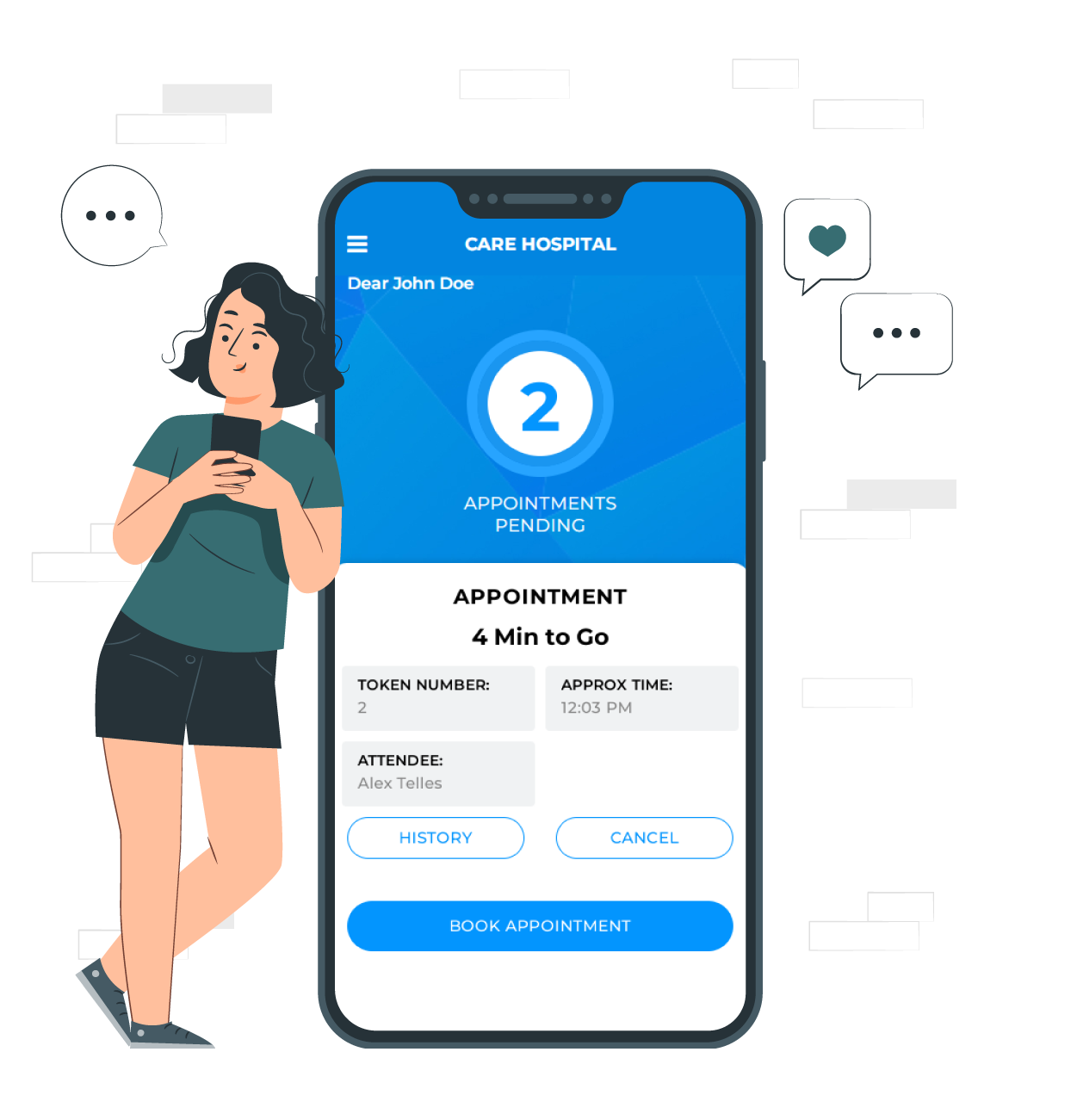
Devotees then choose the visit type they need and book a free slot through the web or the visitor mobile app. Their digital token shows their token number, position in the queue and estimated serving time, and it updates in real time.
Planning capacity per slot
The key question in temple crowd control is how many people each slot can take. Too many and the gate gets crowded again. Too few and devotees cannot get a booking.
Start from what your temple can handle safely:
- How many devotees can move through the darshan area in a set time?
- How many counters or volunteers serve each visit type?
- How much space is there to wait near the gate?
In E-Token Solution, the number of bookings in a period depends on the slot length and the number of attendees who serve that service. Shorter slots or more attendees mean more bookings. If you need a group slot, where many devotees share one time slot, ask the E-Token team how best to set that up for your temple before the festival.
Test your settings on a normal weekend before the festival. Watch how long the line at the gate gets, and adjust the slot length or the number of attendees.
Showing the current slot on a TV at the gate
Devotees who arrive early want to know one thing: is my slot being served yet? A screen at the gate answers that without a volunteer.
The TV token display shows current and upcoming tokens and appointments on a TV. It reads the data straight from your E-Token Solution account, so it updates on its own. You can show the same queue on more than one screen, which helps at temples with several entry points or waiting areas. You can also set the colours, fonts and layout to suit the temple.
Place screens where people already gather, such as the main gate, the shoe stand or a covered waiting area. Make sure they are readable from a distance and protected from rain.
The TV Screen Application is included in the Business plan (₹5,100 or $69 a month) and the Corporate plan (₹9,100 or $125 a month). On a custom plan it costs ₹1,000 as an add-on.
Measuring peak hours
A booking system also gives you a record you did not have with an open line. In the case study, real-time monitoring helped temple management track visitor flow, find peak hours and place staff and resources where they were needed.
E-Token Solution provides reports on queues, customer flow and service performance. After each festival, look at:
- Which slots filled first and which stayed empty.
- Which visit types had the most demand.
- Which days and hours were busiest.
- How many bookings were cancelled or changed.
Use this to plan the next festival. You might open more counters during the busiest hours, add slots for the most popular visit type, or tell devotees which times are usually quieter.
Keeping devotees informed
Automated notifications and reminders tell devotees about their upcoming booking and any change in the schedule. In the case study, these reminders helped reduce no-shows and improved communication between the temple and its visitors. Devotees can also cancel or change a booking themselves, which frees the slot for someone else.
Not every devotee will book online. Keep a way for walk-ins to join the queue when they arrive, so booked and walk-in devotees are served from one queue. Volunteers at the gate can help older visitors who are not comfortable with phones.
What it costs
E-Token Solution has a Free plan with 1 attendee. Paid plans are priced by the number of attendees: Basic at ₹2,100 ($30) a month for 5, Business at ₹5,100 ($69) for 10 and Corporate at ₹9,100 ($125) for 20. Extra attendees cost ₹399 ($5) each. Corporate also adds multiple language support, which may help temples with visitors from many regions. See the pricing page for details, or start a 30-day free trial well before your festival. Learn more about visitor management.
Frequently asked questions
How does online darshan token booking work?
Devotees open the temple's booking page on the web or in the visitor mobile app, choose a visit type such as darshan or pooja, and book a free slot. They get a digital token with their queue position and estimated serving time.
Can a temple offer different booking types?
Yes. You can set up separate services, such as general darshan, special pooja and prasadam collection, each with its own length and staff.
Can devotees without a smartphone still visit?
Yes. Walk-ins can join the queue when they arrive, and booked and walk-in devotees are served from one queue. Volunteers can help those who need it.
Can the queue be shown at more than one gate?
Yes. The TV token display can show the same queue on several screens, so devotees at different gates or waiting areas can see the current slot.
Try it on your own queue. E-Token Solution has a free plan, and paid plans start at ₹2,100 or $30 a month.